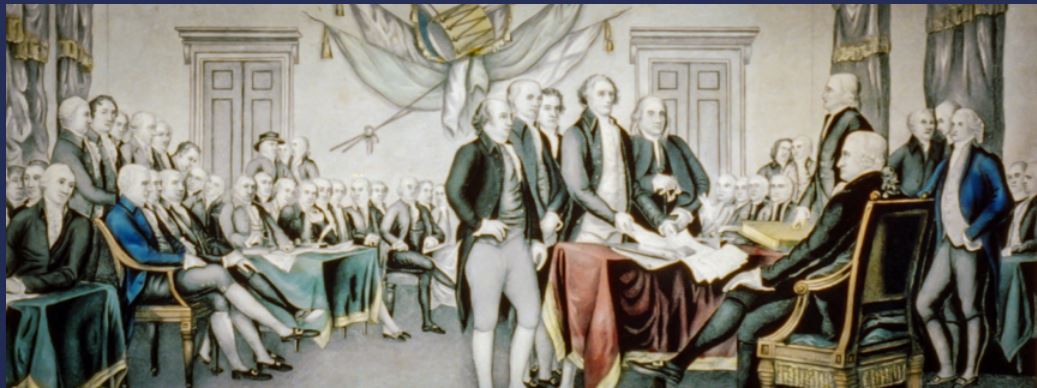
On June 14, 1777, the Continental Congress passed an act establishing an official flag for the new nation.
The flag consists of 13 horizontal stripes, seven red alternating with six white. The stripes represent the original 13 Colonies and the stars represent the 50 states of the Union. The colors of the flag are symbolic as well; red symbolizes hardiness and valor, white symbolizes purity and innocence, and blue represents vigilance, perseverance and justice. On Aug. 3, 1949, President Harry S. Truman officially declared June 14 as Flag Day.
After a British bombardment, amateur poet Francis Scott Key was so inspired by the sight of the American flag still flying over Baltimore’s Fort McHenry that he wrote “The Star-Spangled Banner” on Sept. 14, 1814. It became Our National Anthem in 1931. Click here to test of your American history 🙂
General Flag Display Rules –
It is the universal custom to display the American flag only from sunrise to sunset on buildings and on stationary flagstaffs in the open. However, when a patriotic effect is desired, the flag may be displayed twenty-four hours a day if properly illuminated during the hours of darkness.
Displaying the Stars and Stripes – Did you know this?
The flag is usually displayed from sunrise to sunset. It should be raised briskly and lowered ceremoniously. In inclement weather, the flag should not be flown.
The flag should be displayed daily and on all holidays, weather permitting, on or near the main administration buildings of all public institutions. It should also be displayed in or near every polling place on election days and in or near every schoolhouse during school days.
When displayed flat against a wall or a window, or in a vertical orientation, the “union” field of stars should be uppermost and to the left of the observer.
When the flag is raised or lowered as part of a ceremony, and as it passes by in parade or review, everyone, except those in uniform, should face the flag with the right hand over the heart.
The U.S. flag should never be dipped toward any person or object, nor should the flag ever touch anything beneath it.
No other flag or pennant should be placed above, or, if on the same level, to the right of the flag of the United States of America, except during church services conducted by naval chaplains at sea…for personnel of the Navy…when the church pennant may be flown above the flag.
No person shall display the flag of the United Nations of any other national of international flag equal, above, or in a position of superior prominence or honor to, or in place of, the flag of the United States at any place within the United States or any Territory of possession thereof;
When other flags are on the same halyard or next to US FLAG – When flags of states, cities, or localities, or pennants of societies are flown on the same halyard with the US flag, the US flag should always be at the peak. When the flags are flown from adjacent flagpoles, the US flag should be hoisted first and lowered last. No such flag or pennant may be placed above the US flag, or to the right of the US flag
DISPLAYING FLAG OVER A STREET – When the flag is displayed over the middle of the street, it should be suspended vertically with the union (blue field of stars) to the north over an east-west street, or to the east over a north-south street.
Did you know The meaning for each fold of our Flag – 13 Folds; 13 Colonies:
“The first fold of our flag is a symbol of life.”
“The second fold is a symbol of our belief in the eternal life.”
“The third fold is made in honor and remembrance of the veteran departing our ranks who gave a portion of life for the defense of our country to attain a peace throughout the world.”
“The fourth fold represents our weaker nature, for as American citizens trusting in God, it is to Him we turn in times of peace as well as in times of war for His divine guidance.”
“The fifth fold is a tribute to our country, for in the words of Stephen Decatur, “Our country, in dealing with other countries, may she always be right; but it is still our country, right or wrong.”
“The sixth fold is for where our hearts lie. It is with our heart that we pledge allegiance to the flag of the United States of America, and to the republic for which it stands, one nation, under God, indivisible, with liberty and justice for all.”
“The seventh fold is a tribute to our Armed Forces, for it is through the Armed Forces that we protect our country and our flag against all her enemies, whether they be found within or without the boundaries of our republic.”
“The eighth fold is a tribute to the one who entered in to the valley of the shadow of death, that we might see the light of day, and to honor mother, for whom it flies on Mother’s Day.”
“The ninth fold is a tribute to womanhood; for it has been through their faith, love, loyalty and devotion that the character of the men and women who have made this country great have been molded.”
“The tenth fold is a tribute to father, for he, too, has given his sons and daughters for the defense of our country since they were first born.”
“The eleventh fold, in the eyes of a Hebrew citizen, represents the lower portion of the seal of King David and King Solomon, and glorifies, in their eyes, the God of Abraham, Isaac, and Jacob.”
“The twelfth fold, in the eyes of a Christian citizen, represents an emblem of eternity and glorifies, in their eyes, God the Father, the Son, and Holy Ghost.”
“When the flag is completely folded, the stars are uppermost, reminding us of our national motto, “In God we Trust.”
HAVE A SAFE AND HAPPY INDEPENDENCE DAY! LET’S KEEP AMERICA STRONG AND FREE
If you are looking to purchase a new flag be sure to check out our American Flags for sale. We carry only flags made to the flag manufacturers of America guidelines to ensure that from top to bottom our flags are 100% made in the USA.
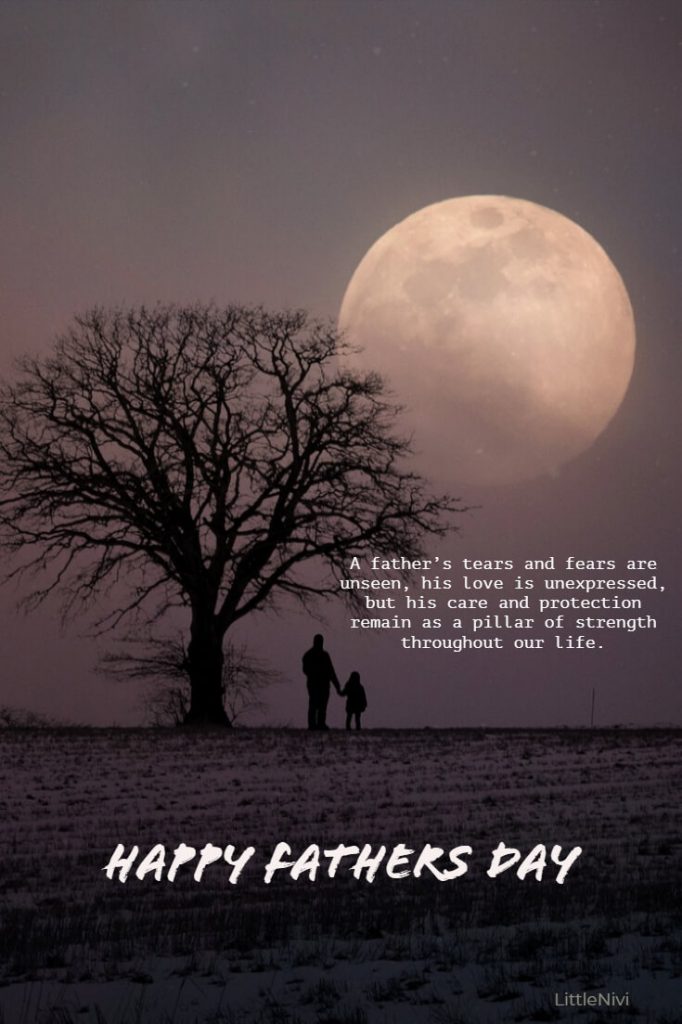
This blog is in gratitude for my dad, Randy, teaching us four girls the importance of good manners. Happy Father’s Day to all you Dads! Thanks for all you do and teach your children – it’s so important. 🙂
I’m so ever grateful for my Dad! My dad was barely an adult when he entered the Navy and fought in the Pacific arena during WW11.
Being brought up at that time in our history, good manners was demanded. You often dressed for dinner and of course everyone was there for family dinner. And good table manners were expected! Napkin in the lap, elbows off the table, cut one bite at a time and so forth. I learn which fork to use first (think back to Pretty Woman with Julia Roberts) and knew which bread plate was mine. Oh, those were the days! … but I digress…
There were no cell phones or internet, we actual had conversations and talked face to face.
Something of a lost art, I fear. However, that brings me the topic (timely as it’s Father’s Day weekend) of practicing good gun range etiquette.
What is “Gun Etiquette”? For many of us older folks (a relative term), it’s pretty much common sense. That is a blend of common sense, courtesy and of course, safety. We want to make sure your day at the range is fun, and good gun range etiquette makes it even better, for everyone.
First thing is always safety:
1. ALWAYS keep the gun pointed in a safe direction. 2. ALWAYS keep your finger off the trigger until ready to shoot. 3. ALWAYS assume the gun is loaded
4. ALWAYS be aware of your target and what’s beyond it.
If you’re new to shooting, most gun ranges require you to watch (or read) about gun safety prior to using the range and they may have their own specific rules which will apply. Most indoor gun ranges also have an RSO (Range Safety Officer) keeping an eye over all the shooters in one specific bay.
“Pay attention to the RSOs, who will tell you what to do in case of an emergency. Remember that the Range Safety Officer has absolute authority on the range. Compliance with his or her instructions is mandatory.” (NRA)
There’s certain terminology when you’re on the range that must be obeyed at all times!
“Ceasefire” is used whenever all shooting MUST STOP!
Generally, this is because of a potential problem or danger. Sometimes, the RSO will need to go down range. More common than not, it’s simply that his / her attention must be away from the firing line.
Safety is everyone’s responsibility and remember Anyone who spots a potential problem should call “Ceasefire”!
When the ceasefire is over, the RSO will ensure that no one is downrange before stating, “The range is hot” (or he may say it’s going Hot). This command alerts everyone that the range is shifting from a cold range or ceasefire state to shooting again.
But wait for the “commence firing” command has been given before you shoot. Commence Firing is the go-ahead command given that tells everyone it’s safe to begin shooting – when you are ready!
A few other rules of Good Gun Range Etiquette are:
1. Do not fire at posts, supports or target frames. These are expensive and time-consuming to replace. It could prevent anyone else from using that lane after you.
2. Shoot only range-approved targets. Check with your range to find out what types of targets are allowed. Some ranges allow only approved paper, cardboard, club-furnished metal targets and clay targets.
3. It’s good etiquette to leave the range better than you found it. Picking up trash, cleaning your firing station, sweeping the casings away and obeying all of the range rules are good gun range etiquette!
4. Please, Don’t bring your pet to the range!
It’s a great weekend to take Dad or let Dad take you to the range! Be safe and enjoy!
I bet you are feeling like me – everything seems to be crazy and every thing is an emergency. Whether its financial, career, self protection, or food. We’re in a time of crisis but not all of it is of our own making.
Let’s talk about where we find common emergencies. How can we prepare for the unexpected and what are the solutions.
Sometimes the ER is about self defense
When its in the middle of the night, and something goes “bump”, that’s an emergency.
Maybe your husband is out of town on a business trip or you’re a single mom, how and what do you do to keep your family safe when you’re startled awake at 3:00 am.
This could be you… you wake up and see a stranger ascending your stairs toward the bedrooms. Are you prepared to protect your family?
Fortunately, for this particular woman, she’s a gun owner.
Training is vital and practice makes perfect right. With the country on lock down, it’s easy to slip out of routine…. and out of training.
With the recent surges in gun sales and much unrest, ammunition is in short supply. So, how do you practice with stay at home orders?
A great and very effective measure of training is called “dry-fire”. I”m giving myself a wake up call and need to schedule in at least 5 minutes to practice, ideally, every day. The main thing is just to start, right?!
Be prepared for self defense. A lot of people are being hurt. Do you have a way to protect yourself, your kids, or others?
Maybe firearms are a little intimidating right now; there are many non lethal tools available. You can check some of them out here.
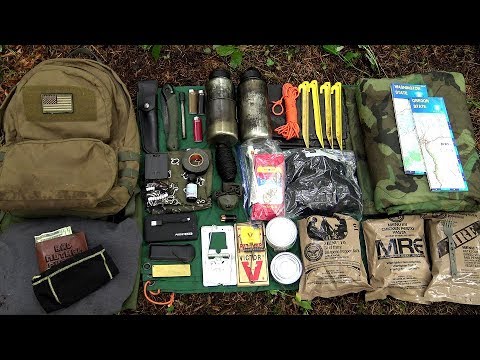
A “Get Home bag” or a “Bug Out Bag”?
A Get Home Bag (GHB) is just that. You are out, away from home and need to get home. Maybe you’re unable to get home due to weather – I’ll never forget “Snow-Mageddon” in Atlanta.
A Bug Out Bag (BOB) needs different gear as you are leaving the safety of home and will be among outside elements for survival (for awhile).
Basically, gear for survival – food, shelter, water. A means of self defense (knife, firearm are ideal because they can also be used for hunting). Don’t forget about a first aid kit. Things happen! Keep in mind you want items that are portable and lightweight.
As far as self defense tools, it’s ideal to have some layers of protection. A firearm isn’t always the best option. I’m a rep for Damsel in Defense and all our gear is non lethal.
Non lethal tools range from pepper sprays,Tactical pens, car care kits, striking tools, stun guns, concealed carry purses and more.
What about your finances? Yes, we even need to have an emergency fund.
Honestly, in thinking about emergencies, finances weren’t at top of the list, nor was thinking about insurance. Not everything you think should be covered is actually covered. You certainly don’t want to find out after a natural disaster, you didn’t have the coverage your thought. Remember Hurricane Katrina?
This is a good time to double checking with your insurance carrier. You don’t want to be surprisd!
After all, We are in hurricane season and you may be surprised to find out that most policies don’t cover flood damages. Are you prepared for natural disasters?
With the world upside down, I hope I have shared some things that can help you to feel more prepared and protected.
Remember, your life is worth fighting for. I design clothing to make it easy to dress around your defense tool. As American Express said; “Never leave home without it” – a self-defense tool.
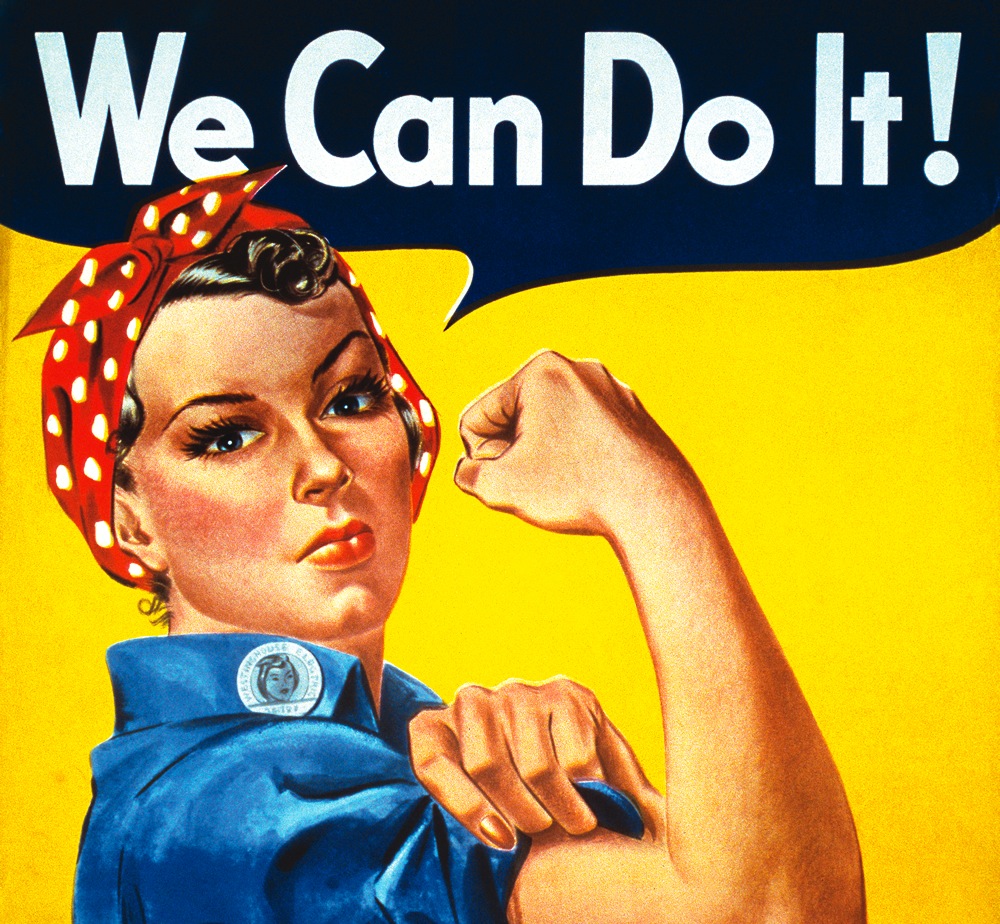
In my opinion, one of the first decisions to make regarding your self defense and protection, is how far are you willing to go i.e. fight? This decision is about Life or Death. A decision has to made in regard to yourself and or your family and loved ones. This is the momma bear philosophy – Ain’t NO ONE gunna hurt my cubs! It’s that natural instinct within.
This is a great article that exposes you to the mindset, especially for women, in owning the responsibility to survive.
The following is from Guns in the News, an article by Il Ling New.
“Develop the Woman Warrior Within. Exercising your right to protect yourself makes you a more powerful version of yourself. Being a concealed carrier means being more prepared for the world. For those of you who realize these things, consider how you can be the best defender you can be.
All very well and good, you might be thinking, but how?
When I first came to Arizona’s renowned Gunsite Academy, much was made of us instructors having appropriate “command presence.” (Probably much was made of this for me, since I was the only female—a small and squeaky-voiced one, to boot.) This term, borrowed from the military, describes how one uses comportment to manage others. It includes everything: posture, movement, eye contact, voice and more.
You are someone who is capable of defending yourself. You have done much to avoid becoming a victim. If you believe it, your carriage will show it. Most students I know who, in their hearts, believe in their willingness to fight and have even the beginnings of training, have the bearing to show for it. I’ve seen them grow fast. They pay attention to their surroundings.
They move with purpose. As we say at Gunsite, they don’t look like food. In a personal defense situation, having a demeanor that reflects a strong ability to defend yourself is a powerful part of your weaponry. Conversely, simply “having” a gun—but looking like you can’t or won’t use it—could be the death of you.
You may or may not have presence. But, happily, you can develop it. (Note: If you’re a woman, this doesn’t mean you act like a man. If you’re a man, it doesn’t mean you act like a drill sergeant.)
How can you improve your command presence? First, make the decision that you will fight for your life. Do it before you need it. Do it now. This is not something to be considered as you’re facing a life-or-death ordeal. And, as intuitive as it may seem, you must actively think through and then confirm that decision. While you may think that we all “want to live,” fighting for our lives is not automatic.
A key part of this is learning to use your voice. Not the “#voice” we see on social media. Your real one. It’s an important tool, and if you have one, it’s always with you. But, maximizing its effectiveness actually requires practice—like any other weapon. It’s not the same voice you use to shout at your partner or to flag down a taxi. And for women, it is not the slightly higher, taut sound that naturally comes when we unexpectedly shout out.
Our command voice must be the biggest, baddest one we have, and it comes from deep within the core.
A police officer and former Marine suggested I practice finding that voice while driving in my car—alone, preferably. The only way to develop it, he said, is to use it. He was absolutely right, and if you see me driving along looking like I’m digging deep and bellowing at the windshield, wave.
Train and Practice. Develop as much confidence in your ability to fight as you can. Get training from professionals. You don’t have to enroll in years or even weeks of training (though that would be nice). But, at the least, get formal, professional instruction from those who know how to deliver it. Fighting with a firearm is not intuitive, and being effective in that fight requires even more of you.
In my own ongoing efforts, I separate training from practice—training gives me the technology and the know-how, while practice hones my skills to deliver them. In other words, training is the “what,” while practice is the “how.”
Dry-practice your draw every morning. This is especially important for women, as it is rare for us to be able to carry in the same place every day. We can strive for that, sure, but there are times when we may have to carry in that (dreaded) purse, or we might have to use that belly-band/bra/etc. holster. So, before you go out the door every day, go through at least five dry presentations of your firearm, from wherever it’s going to be that day.
Alwaysobserve the safety rules and, especially, ensure that your gun is unloaded. I always start at a very deliberate half-speed to make sure I execute each step correctly with the clothing and equipment I’m using that day. I want to reacquaint my body with the proper movements. If I’m satisfied, I then allow my body to gradually move to full efficiency over the next iterations.
Keep in mind that I’m not just practicing the draw; I’m actually envisioning needing to use my firearm every time I practice. Whatever your chosen defensive tool, you must wield it like you know how to use it.
In addition, I am not focusing on dry-firing (pressing the trigger). I am focusing on being able to present, or draw, the firearm, including getting it into a firing position, proper grip and all.
Do this with purpose. Personally, I do often choose to dry-fire—that is, press the trigger—during this part of my day, but the concealed-carry draw-stroke is the focus of my efforts. (Safety first: Always be certain your firearm is unloaded for any dry practice and aim at a safe backdrop.)
Visualizing Helps. Consider your day and its variables. Where will you be? What defensive tools will you have? Are you responsible for only you? Will you be with other people? If you are with someone you might need to defend, have you already discussed what your actions will be in the event of a car accident/fire/crime? If not, should you discuss possibilities with him or her?
“What if?” is an everyday question.
Planning ahead so you know what to do if….
I try to stop and imagine a situation in which I need to use my firearm. Right now, I’m sitting in a camper in a nearly deserted public campground. Just before working on this piece, I took a brief moment to tell myself a story that included a vehicle of hostiles posing a threat. When would I begin to respond? What would I do first? What tools do I have at my disposal? You can imagine the many possibilities—and that is the point.
Engaging the mind, even briefly, with such visualization provides it with data that could end up saving the fractions of a second that can mean all the difference. Even better, it might help you to avoid a bad situation altogether. I cannot count the number of times such mental exercises have led to reassessing my seating choice, path through a store, arrangement of carry-on baggage and more.
Each of us has the right to self-protection. If you’re a concealed carrier, you have more options than others. Man or woman, we’ll always have differences in what we do and how we do it, but embracing this right means exercising it to the best of our individual abilities. Our mindsets matter.”
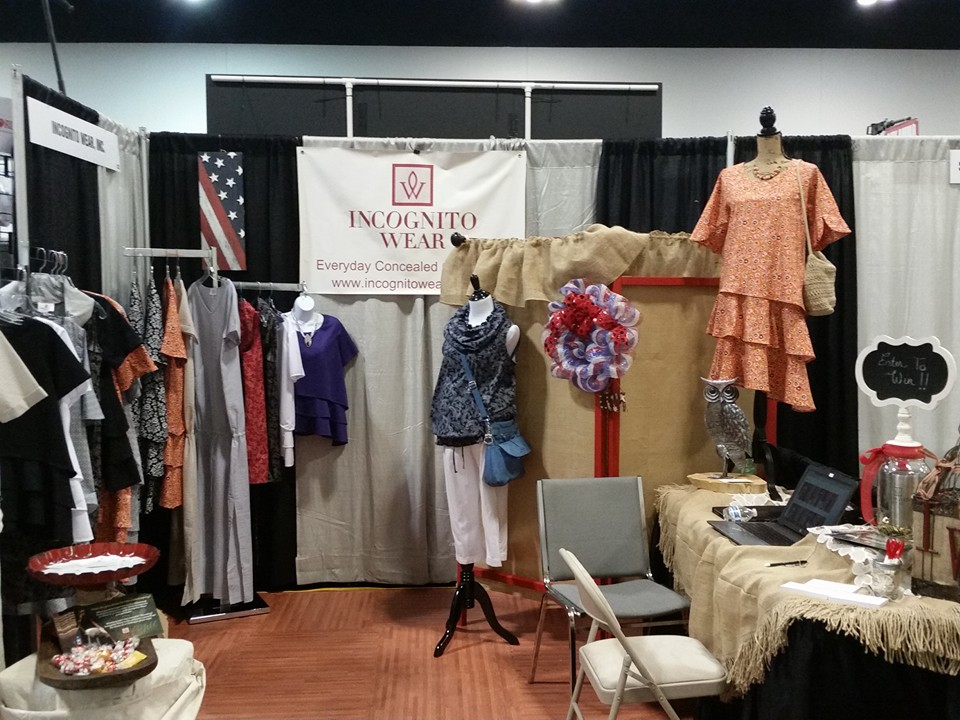
A memory- Wow. I can’t believe this journey started 4 years ago. This is my VERY first set up / booth. I’d just started my business and a scared first time vendor at the USCCA concealed carry expo in my home town.
2016
I remember thinking what am I going to do if my clothes come! My samples had to be shipped overnight, and grateful they made it!? I was warmly greeted by the neighboring vendors, given much needed assistance, advice and well wishes. Of course, I also got a lot of interesting looks as to why a “Women’s Boutique” ??was at this trade show for self defense. Well, for me, that was exactly the point! It was my purpose.
I was a gun newbie and SO frustrated in trying to dress around my firearm and concealed carry. I couldn’t believe the words that came out of my mouth – I really had nothing to wear! I knew with the amount of frustration I was experiencing, I couldn’t be alone in this silent struggle to dress fashionably and be armed.
So, being called a “Women’s Boutique” was the bomb… along with the sales! That was the best feeling to be able to help other women to live this lifestyle; confidently, and well, be armed and incognito!
What about that “Behind the scenes” Part? Honestly, a lot of cussing and tears.
It’s been a long journey working full time and starting a clothing line by yourself on a side hustle. I had no idea what was a head of me… if I had, I’d been too afraid to start!
There’s so many facets to creating a garment – who knew?! You just go to the Mall or boutique and search to you find something you like. But, what if you can create it? Can you say how do I start and oh, it’s overwhelming.
Learning how to source fabrics and where, finding industry experts like a pattern maker, learning the industry vocabulary like having tech packs, and ultimately the key to getting clothing made is finding and working with a manufacturer (in the USA). And then, finding a factory willing to work with a new designer/company, my small quantities and I believe the type of clothing I was designing was a touchy subject for some.
And that’s just for making the clothes – then there’s the marketing conglomerate… designing a website and the web platform and a check out process. Decisions have to be made about the overall look, what colors to pick and why, coming up with a logo and a design, and the legal side such as trademarks, business licenses, tax numbers, and the like.
Then you shout from the roof tops to get the word out. Well, you turn to internet and the social medial world to market yourself and your business. Email marketing and blogging – oh my!
The world of social networks
I want to encourage you if you’re thinking of a business. Stop trying to make it perfect and just start walking. I still don’t have it all figured out but if I waited, I wouldn’t have been able to help so many women to have the courage and confidence to carry their firearm so they can protect themselves and save lives. After all, helping others and having them looking great is what’s matters.
Thank you to all my wonderful customers! I love working with you at these shows! Thank you to the industry folks and trainers, I’ve meet over these past few years. Thank you for your support, encouragement, and accepting a new concept to dressing around a firearm.
No matter what the industry is, there are a lot of players, but there’s only one you and you have a unique gift and voice. It’s baby steps – Just keep walking! You’ll walk into success.

![image002[1]](https://www.aflag.com/wp-content/uploads/2016/04/image0021.jpg)
![image004[1]](https://www.aflag.com/wp-content/uploads/2016/04/image0041.jpg)
![image008[1]](https://www.aflag.com/wp-content/uploads/2016/04/image0081.jpg)
![image020[2]](https://www.aflag.com/wp-content/uploads/2016/04/image0202.jpg)